
Piling
Micro Piling vs Bored Piling: Which Does Your Project Need?
Both are drilled, cast-in-place piles, but they suit very different sites. Here is how micro piles and bored piles compare, and what decides the choice on your project.
Colombo Piling3 min read
If your engineer has said your building needs piles, the next question is usually which kind. Two of the most common answers in Sri Lanka are micro piles and bored cast in-situ piles. Both are drilled into the ground and filled with concrete or grout on site, but they are built with very different equipment and suit very different projects.
This guide explains the difference in plain terms, so you can have a better conversation with your engineer and your piling contractor.
What is micro piling?
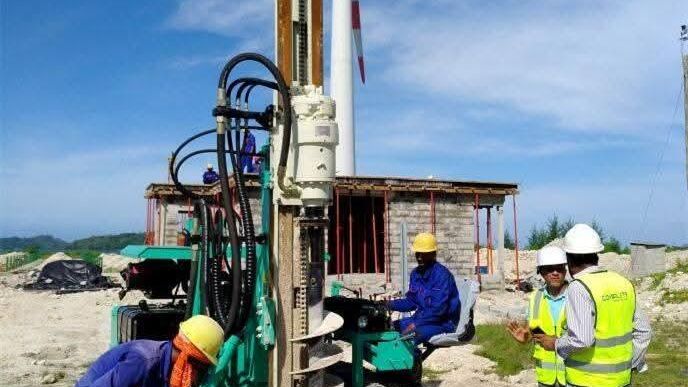
Micro piles (also called grout piles or mini piles) are small-diameter piles. A compact drilling rig bores a hole to the design depth, a steel bar or light reinforcement cage is lowered in, and the hole is filled with cement grout or concrete from the bottom up. Our micro piles range from 150 to 600 mm in diameter.
Because the rigs are small and drilling causes little vibration, micro piles can be installed where a large rig simply cannot go: narrow plots, sites right next to existing houses, inside buildings and under low headroom.
What is bored piling?
Bored cast in-situ piles are large-diameter piles, ranging from 750 to 2,000 mm in our work. A rotary piling rig bores the hole, temporary casing or a support fluid keeps it open where the ground is weak, a full reinforcement cage is lowered in, and concrete is placed with a tremie pipe.
Each bored pile can carry a very large load, so they are the usual choice for multi-storey buildings, bridges and heavy industrial structures, where a few big piles replace many small ones.
The main differences at a glance
- Diameter: micro piles 150–600 mm; bored piles 750–2,000 mm.
- Load per pile: micro piles carry modest loads each, so more are used; one bored pile can carry many times more.
- Equipment: micro piles use compact tracked rigs; bored piles need a large rotary rig, a crane and space for reinforcement cages.
- Site access: micro piling works on tight or enclosed sites; bored piling needs room to move and set up a heavy rig.
- Vibration and noise: both are drilled rather than driven, so vibration is low; micro piling rigs are typically quieter and lighter still.
When micro piles are usually the better choice
- Houses and low-rise buildings on narrow urban plots
- Extensions and extra floors on existing buildings
- Underpinning foundations that have settled or need strengthening
- Work inside or under existing buildings, or with low headroom
- Sites where neighbouring structures are sensitive to vibration
When bored piles are usually the better choice
- Multi-storey commercial and residential buildings with heavy column loads
- Bridges, flyovers and other infrastructure
- Industrial plants and heavy machinery foundations
- Sites where firm ground or rock lies deep below soft soil
What decides it on your site
The final choice is always made by the structural or geotechnical engineer, based on a few key facts:
1. The site investigation
Boreholes and soil tests show how deep the firm ground is and what lies above it. This decides how long the piles must be and how much load each can carry.
2. The loads
Light, spread-out loads suit a group of micro piles. Large, concentrated column loads usually point to bored piles.
3. Access and surroundings
If a large rig cannot reach the pile positions, or neighbouring buildings are very close, micro piles are often the only practical option.
4. Programme and cost
Fewer, larger piles can be quicker on an open site; many small piles can be more economical on a tight one. A contractor who offers both methods can compare them honestly for your project.
How we can help
We install both micro piles and bored cast in-situ piles, so we can look at your drawings and site investigation and recommend the option that fits. Contact us for advice and a free quote.
- micro piles
- bored piles
- foundations